
Rise of the Video Pod

Podcasts have exploded over the past decade. What once felt like a niche format has become one of the most mainstream and accessible forms of media in the world. But lately, something else has been happening in the podiverse.
And it’s no wonder, when you consider the pandemic, faster connectivity, smarter smartphones, the rise of the influencer, and seemingly everyone you know starting a podcast.
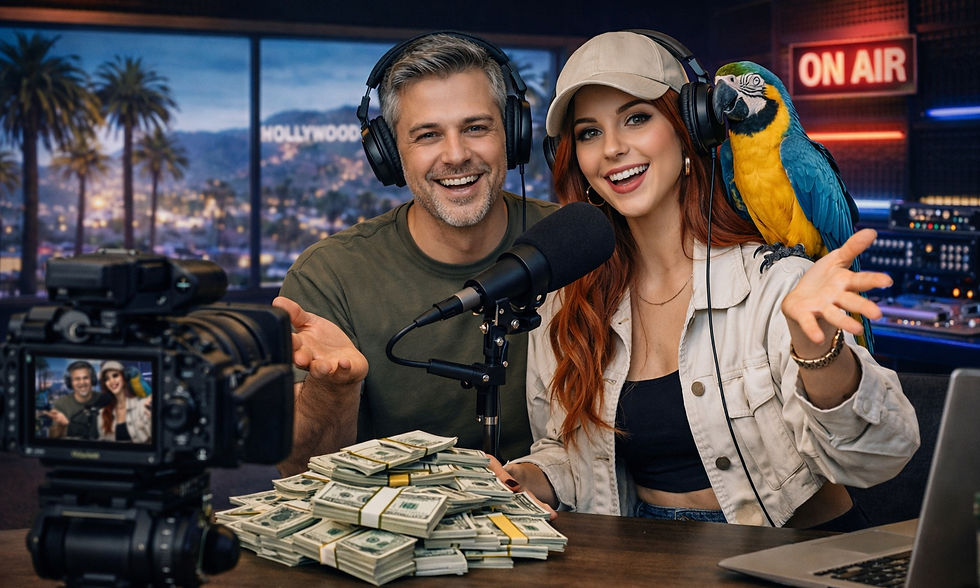
People are no longer just listening to podcasts. They're also watching them.
At this point, most people are sold on the meteoric rise and staying power of podcasts. We’re not surprised by the numbers anymore. According to Edison Research’s The Infinite Dial, there were 158 million monthly podcast listeners in the U.S. and over half a billion listeners worldwide in 2025, or at how fast those numbers have grown over just the past couple of years.
However, this massive shift to video podcasts contradicts a lot of what made audio-only podcasts so great. They were relatively cheap and easy to produce, and hosts could literally record from anywhere they wanted, pants optional. Participants with great insights could contribute without worrying about the very relatable feeling of being camera shy. On the listener’s end, audio-only podcasts required virtually no download time and made for easy listening from just about anywhere. We had a good thing going!
So why did the video pod explode?
For starters, there’s the natural progression of technology. There are always new ways of creating content that pop up, some succeed, some don’t. And we can wax on and intellectualize why one worked and another didn’t, but it’s usually a myriad of reasons that don’t always make perfect logical sense.
I believe that when the pandemic hit, and then multiple actor and writer strikes happened, many celebrities suddenly had a lot of time on their hands, and a famous face to capitalize on. So they took to creating video podcasts, and that sent the format into overdrive. The old-fashioned Hollywood star system was suddenly at work in podcasting...take "Fake Doctors, Real Friends," with Zach and Donald.
Stats = louder than words.

About 51% of Americans have watched a video podcast, and nearly half have both listened to and watched podcasts. Among weekly listeners, that number jumps significantly, with around 85% now consuming shows that include some form of video.

At the same time, YouTube has become the most-used platform for podcast consumption, with roughly a third of weekly listeners turning to it over Spotify or Apple Podcasts. And it’s not just on phones or laptops. YouTube has reported hundreds of millions of hours of video podcast viewing on television screens, with that number continuing to grow year over year.
For many creators, the podcast has become a filmed conversation designed for both listening and viewing. At the same time, some shows that started as YouTube series or TV-style content have evolved into audio podcasts, while others have gone the opposite direction.
The lines have gotten so blurred, what even counts as a podcast anymore?
For example, one finance-industry client of ours refers to a piece as a roundtable or discussion if we produce it without visible tabletop microphones. Add the microphones, and suddenly it’s a video podcast.
The bottom line?
Does adding a video component completely blow up one of the biggest advantages of how cost-efficient podcasts are? Yes. However, with that increase in time and resources, comes an exponential increase in outputs and reach that is far beyond where an audio-only podcast can go.
Click-worthy excerpts and teasers to use across social media work amazingly well in video form because most social media are visual platforms. When's the last time an audio-only post piqued your interest on instagram? Video and compelling visuals are what captures attention.
Instead of a few potential outputs from an audio-only episode, recording a video component can yield dozens of shareable moments. Take this clip (above) from the LoveLife Podcast, which is one of many verticals pulled from a single episode.
So while the benefits of adding video are clear, let’s get down to brass tacks: what is the added investment of time, money, and resources needed to add a video component to a podcast?
For businesses, organizations, and corporations with an established look, brand, and reputation to uphold, Zoom-quality recordings usually are not going to cut it. More often than not, you’re looking at several thousand dollars more than the cost of producing an audio-only podcast.
That being said, there's a wide range of production scale for video pods, from Hollywood-level productions to simple, phone or computer recordings. It all depends on your goals, budget, and brand needs.
It’s important to keep in mind that even some of the most successful podcasts, which may appear relatively simple in their production value, are often far more involved than they seem. Let's set aside politics for now and take into account The Joe Rogan Experience, widely considered the most popular podcast in the world for 2025 (Edison Research, Spotify, Apple Podcasts).
These are super long episodes, often running several hours. That means studio engineers, medium- to high-quality cameras, lighting, planning, a significant amount of editing, color grading, sound mixing, and multiple rounds of review between Joe and his team, as well as the teams of his high-profile guests.
In other words, while the show may look relatively stripped down, that simplicity is often carefully produced to appear that way. To quote Dolly Parton, “It takes a lot to look this cheap.”
There are so many to discuss, but here's a few that I think do video particularly well.
Club Random with Bill Maher, which is a casual sit-down conversation with noteworthy figures across the spectrum from actors to politicians. What does Club Random do well? The laid-back nature of it makes it a great watch or listen on a long commute. It's a refreshingly candid side to public figures that you don't always get to see, often due to recreational substances.
All Out with Jon Dean is a sharp, LGBTQ+ lifestyle podcast exploring queer health, identity, relationships, and the conversations people are actually having.
What does All Out do well? The host Jon truly knows his audience, and doesn't shy away from taboo, or just uncomfortable subject matters. The various iterations of it make the show ultra accessible across YouTube, Instagram, TikTok, and even a more provocative and unedited version behind a Substack paywall.
In Good Company is elevated by its understated style and strong host presence.
What does In Good Company do well?
Led by the CEO of Norges Bank, it proves that simple, thoughtful conversations can feel incredibly smart, polished, and compelling.
My guess is that the next evolution of the podcast won’t just be something you listen to or watch. It’ll be something you engage with much like "lives" on social media platforms.

Looking forward, I envision more interaction and more direct audience feedback. More shows designed not just for a full-length episode, but for the dozens of ways that conversation gets sliced, shared, and experienced afterward. And the lines between what is a video, a discussion, a podcast, or a video podcast are going to continue blurring.
However it evolves, one thing is clear: podcasts aren’t going anywhere. And helping shape that evolution is exactly the kind of work we love doing.
Disclaimer: Our posts are always researched, and thoughtfully written by a real human person so mind the typos.

